
The Clutter Problem in Robotics
Why messy, changing environments break autonomy, and why the fix starts with human judgement.
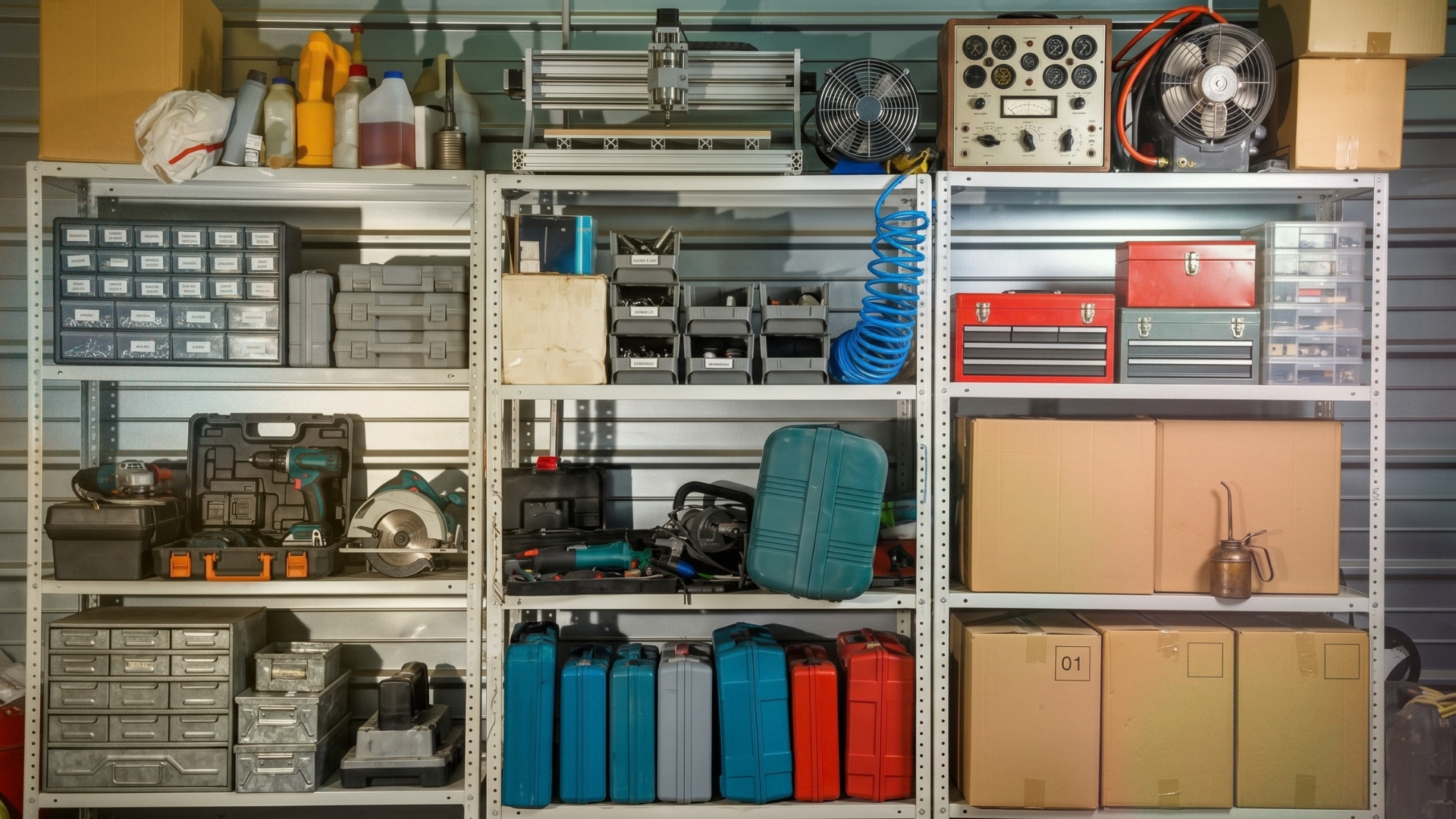
Most autonomous systems perform brilliantly right up until the moment they encounter the real world. In controlled laboratories and pristine test facilities, lidar returns are crisp, surfaces are predictably level, and paths remain unobstructed. But critical infrastructure sites are not laboratories. They are dynamic, crowded, and continuously shifting.
A maintenance crew leaves a tool cart three inches into a designated transit corridor. Rain creates reflective pooling on a polished epoxy floor. Sunlight glares through a skylight at an angle never observed during winter commissioning. To a human operator, these anomalies are trivial nuances handled without conscious thought. To a classical motion planner or an end-to-end vision model, they represent catastrophic edge cases.
The limits of classical sensor redundancy
The standard industry response to environmental uncertainty has been additive: more sensors, denser point clouds, higher frame rates, and increasingly conservative speed limits. Yet hardware redundancy quickly encounters diminishing returns when the underlying ambiguity is semantic rather than perceptual.
Autonomous mobile platforms do not struggle simply because they cannot detect an obstacle; they struggle because they cannot discern intention, risk, or context. Knowing that a cluster of points exists thirty centimetres ahead does not inform the machine whether the object is a harmless empty plastic bag, a structural pipe, or a high-voltage temporary conduit.
"When robots stall in complex sites, the bottleneck is rarely perception fidelity. It is the absence of contextual judgement under ambiguity."
Why physical trials fail to expose the edge
Deploying robots directly into live industrial environments to gather edge-case data presents an unsustainable paradox:
- Safety boundaries prevent genuine stress-testing: Facility managers cannot allow an unverified 800-kilogram autonomous platform to explore high-risk failure modes near operating pipelines or electrical substations.
- Rare corner cases are difficult to orchestrate: Dangerous environmental shifts occur infrequently and cannot be scheduled on demand for validation.
- Physical iterations move too slowly: Reconfiguring physical obstacles on site consumes entire shifts and yields only a handful of recorded trajectories.
Synthesising the human judgement layer
At Mile Robotics, we take an entirely different architectural route. Instead of attempting to learn edge cases through slow and risky physical field trials, we rebuild your operational site as an immersive, physics-accurate simulation.
We place experienced human operators directly inside these simulated environments through high-fidelity interfaces. Operators navigate complex clutter, manage sudden equipment failures, and recover from near-miss incidents hundreds of times faster than real-world testing permits.
Every sub-second correction, hesitation, steering adjustment, and recovery action is captured as structured telemetry. This high-density decision data provides the foundation that modern physical AI models need: not just raw sensor inputs, but verified demonstrations of human competence and judgement under stress.
When the robot finally deploys onto the physical facility floor, it does not encounter the site for the first time. It arrives having already navigated thousands of human-resolved permutations of clutter, giving deployers and regulators verifiable evidence of operational readiness.